
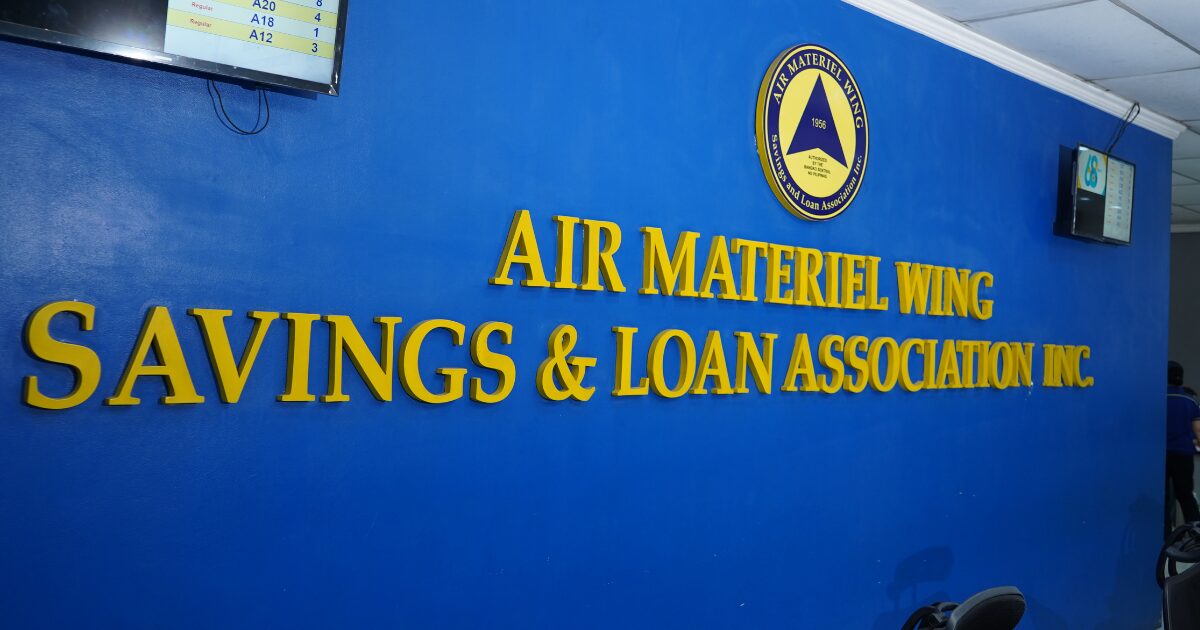
There is a kind of financial institution in the Philippines that holds hundreds of billions of pesos, lends almost entirely to soldiers, teachers, and government workers, and that most Filipinos have never knowingly heard of. It is not a bank. It is not a cooperative, though people constantly confuse it for one. It is a non stock savings and loan association, an NSSLA, and the gap between how important these institutions are to their members and how little the public understands them is wide enough to be worth closing.
A non-stock savings and loan association is a non-stock, non-profit corporation that pools the savings of a defined group of members and lends those funds back to the same members for personal and household needs. It is owned by its members rather than by shareholders, and it is supervised by the Bangko Sentral ng Pilipinas under Republic Act 8367. That is the whole NSSLA industry explained in three sentences. The details are where the misunderstandings live.
In my 16 years (and counting) in an NSSLA that serves the military community, most people are confused when I say I work for a savings and loan association. Is it lending? Yes, it is one. Most people identify NSSLA as “lending” and assume that NSSLAs are similar to street lenders seeking loans from pensioners. The association I serve is a 25-billion-peso financial institution, larger than some banks and cooperatives. This is not just a typical lending. It works like a bank at scale, but it is subject to different regulations given its unique structure and “well-defined group” members. Being in an NSSLA means you know the customers, unlike dealing with the public, since the owners are the members.
I write this from two vantage points that rarely sit in the same person. I help set strategy as part of its senior management and serve as chief compliance officer inside one, so I see the model from the operating side, where the rules meet real members at a real counter. So let me give you the explainer that does not yet exist anywhere in plain English: what an NSSLA is, how it differs from the cooperative and the bank it gets mistaken for, how its loans actually work, who watches it, and why the Philippine version is a genuinely unusual entity in the financial world.
What an NSSLA actually is
An NSSLA is built on one principle: members pooling money to lend to each other. The law that governs it, the Revised Non-Stock Savings and Loan Association Act of 1997, defines it as a non-stock, nonprofit corporation that accumulates its members’ savings and uses those accumulations to make loans to those same members for household needs, home financing, and personal finance. Read that definition slowly, because every clause in it is doing work.
Non-stock means no one owns shares that can be bought, sold, or appreciated. There are no investors hoping the institution’s value rises. A non-profit institution does not exist to generate returns for outside owners. Whatever it earns above its costs flows back to the members. And members are the operative word throughout, because an NSSLA does not serve the public. It serves a closed, defined community, which the law and the Bangko Sentral call a well-defined group, typically the employees or retirees of a particular company, agency, or sector. You cannot simply walk in and open an account the way you would at a bank. You belong, or you do not.
This is why an NSSLA feels less like a financial institution and more like a financial commons. The members are simultaneously the savers, the borrowers, and the owners. The money you save becomes the money your colleague borrows, and the interest your colleague pays comes back to the pool that is partly yours. Value created inside the system stays inside the system.
NSSLA versus cooperative versus bank
The single most common error is treating an NSSLA as a kind of cooperative. They feel similar because both are member-owned and prioritize members over outside shareholders. But they are different legal creatures under different regulators, and the difference matters the moment something goes wrong, or you are deciding where to put your money.
Here is the clean distinction:
| NSSLA | Cooperative | Bank | |
|---|---|---|---|
| Primary regulator | Bangko Sentral ng Pilipinas | Cooperative Development Authority | Bangko Sentral ng Pilipinas |
| Governing law | RA 8367 | RA 9520 (Cooperative Code) | General banking laws |
| Ownership | Members (non-stock, non-profit) | Members (one-member, one-vote) | Shareholders (for-profit) |
| Who it serves | Members only, within a common bond | Members, or sometimes general public | The general public |
| What happens to surplus | Returned to members as share of earnings | Returned to members as patronage and dividends | Distributed to shareholders as dividends |
The regulator line is the one to memorize. An NSSLA answers to the Bangko Sentral ng Pilipinas, the central bank, the same body that supervises universal and commercial banks. A cooperative answers to the Cooperative Development Authority under the Philippine Cooperative Code of 2008. That is not a trivia-level distinction. It means an NSSLA is held to a central-bank style of prudential supervision, with capital ratios and examinations, while a cooperative operates under a developmental agency built to nurture the cooperative movement. Same member-owned spirit, very different supervisory machinery. In my compliance work, the practical weight of that line is unmistakable: the standard against which an NSSLA is examined is a prudential one, closer to a bank’s than to a non-government organization for community development.
The bank comparison is simpler. A bank is a for-profit, shareholder-owned institution that serves the general public and distributes its profits to shareholders as dividends. An NSSLA inverts almost every term of that sentence. It exists to serve its members and to return value to them, not to maximize a share price for owners who may never set foot inside it.
How an NSSLA works: savings, loans, and the common bond
Strip away the legal language, and an NSSLA runs on a simple cycle. Members contribute savings and capital contributions. Those funds become the pool. The pool finances loans to members. The loans earn interest. The net income, after costs and reserves, comes back to members, often as a share of earnings proportional to their contributions. The cycle then repeats, ideally compounding over time, the way any reinvested pool does.
The common bond is what makes the cycle work safely. Because membership is restricted to a well-defined group, the institution is lending to people it can actually know and, crucially, to people whose salaries it can often reach directly. Under RA 8367, the employer’s treasurer or paymaster is authorized to deduct loan repayments straight from a member-borrower’s salary or pension and remit them to the association. That salary-deduction mechanism is the quiet engine of the whole model. This is why default risk in a well-run NSSLA can be strikingly low, and it is why these institutions can lend to ordinary employees who might struggle to get an unsecured loan elsewhere. Collection does not depend on chasing a borrower after the fact. It happens at the source, before the money ever reaches the member’s hands.
There is also a tax dimension that members rarely notice, but that shapes the economics. Under the law, an NSSLA is exempt from income tax on its income, including interest on its bank deposits, and members’ interest earnings and their share of net income are likewise exempt from income tax. The policy logic is that this is mutual money, members’ savings being lent to members, not a commercial profit center, so it should not be taxed as though it were one. That exemption is part of why the returns to members can be competitive, and it is another expression of the same principle: the value stays with the members rather than leaking to an outside claimant, in this case, the taxing state.
The single borrower’s limit: why your NSSLA loan is capped
If you have ever wondered why your NSSLA will only lend you up to a certain amount, no matter how much you ask for, the answer is written into the law, and it is one of the most misunderstood features of the whole system. It is also the subject I studied most closely, so let me give it the space it deserves.
Under RA 8367, a member’s loan cannot exceed the amount that the member has deposited and contributed to the association, plus twelve months of his regular salary or pension, plus other income received with regularity, or alternatively, up to seventy percent of the fair market value of any property he offers as collateral on a mortgage. That is the single borrower’s limit at the individual member level. Layered on top of it is an institutional ceiling in the Bangko Sentral’s rules: the direct indebtedness of any one member-borrower generally cannot exceed fifteen percent of the association’s unimpaired capital and surplus, with narrow exceptions for loans backed by government securities. The Bangko Sentral’s implementing regulations detail these limits.
Notice that there are two ceilings doing two different jobs, and the distinction is the heart of it. The member-level cap ties your borrowing to your own stake and your own capacity to repay. The institution-level cap limits how much of the shared pool any single borrower can command. Members often experience either one as a restriction. I would argue both are closer to protections, and reading them as anything else misunderstands what the pool is. The member-level cap prevents any one member from drawing down a disproportionate share of funds that belong to everyone. The institutional cap is a concentration-risk rule in disguise: it ensures that a single large default cannot threaten the savings of the entire membership, which is exactly the kind of systemic protection a central bank supervisor insists on. The limit is not the institution being stingy. It is the institution protecting the commons from any one member, including you, on the day you most want to over-borrow.
My father-in-law is a retired Philippine Army personnel and knew his fellow retirees. In my father-in-law’s colleagues’ case, they prefer to max out their pensions through loans so they can enjoy the benefits now rather than later. Thus, they would get loans more than 12 times their pensions. There are good and bad effects of this behavior, some used the proceeds from the loan not to build their net worth and capacity to earn, making them bankrupt just a few months after they got their loan. On the other hand, some use the funds to invest in assets that will generate additional income, such as rental income from real estate investments or sales from a new business venture. It is not really the statutory cap of 12 multiples of salary or pension that’s important, it’s the purpose of the loan that will determine whether loans help members. With the evolution of the Philippine Financial industry, no one can stop any NSSLA member from getting loans from digital lending apps, credit cards and retail lending institutions not supervised by BSP, making the intent of the single borrower limit for NSSLA limited.
Who watches the NSSLA: RA 8367, the BSP, and consumer protection
Because an NSSLA holds other people’s money, it cannot operate on trust alone. It sits within a supervisory framework that has tightened considerably in recent years.
The foundation is RA 8367 and the Bangko Sentral’s Manual of Regulations for Non-Bank Financial Institutions (MORNBFI). The prudential requirements are recognizably central-bank in character. An NSSLA must maintain a capital-to-risk-assets ratio of at least ten percent. It must set aside a withdrawable share reserve equal to two percent of members’ total capital contributions, invested in government securities. Its investments outside its core lending are capped. Its trustees and officers operate under rules the Bangko Sentral has progressively sharpened, including guidelines on compensation issued as recently as 2024. These are not the light-touch rules of a club. They are the rules of a supervised financial institution.
On top of prudential supervision sits a newer and increasingly important layer: financial consumer protection. The Financial Products and Services Consumer Protection Act of 2022 named the Bangko Sentral as the regulator responsible for protecting the consumers of its supervised institutions, and it gave the central bank real teeth, including the power to adjudicate purely civil financial disputes up to ten million pesos and to enforce rights to disclosure, fair treatment, data privacy, and timely redress. For an NSSLA member, that means the institution is now answerable not only for staying solvent but for treating you fairly as a consumer. The shift from pure prudential oversight toward consumer protection is one of the most consequential changes in how these institutions are governed, and most members do not yet realize they have those rights. From the compliance seat, it changes the daily job: an association now has to be able to show not just that it is sound, but that it disclosed clearly, priced fairly, and resolved complaints on time.
How big is the sector, and why so few people understand it
The NSSLA sector is far larger than its public profile suggests. As of the end of 2023, the industry’s total assets stood at roughly 316.8 billion pesos, according to Bangko Sentral data, with members’ loans accounting for about 77 percent of those assets, funded mainly by members’ own capital and deposits. The Bangko Sentral’s Report on the Philippine Financial System for the second semester of 2024 confirms the sector carried that strength into 2024, continuing to grow assets and stay profitable. In the recent Alliance for Non-Stock Savings and Loan Association convention last June 2026, the NSSLA industry grew to 354.1 billion pesos in 2025, from 333.5 billion in 2024, with 203 registered NSSLAs. This is not a fringe corner of Philippine finance. It is a multi-hundred-billion-peso pool serving hundreds of thousands of working Filipinos.
So why is something this large so poorly understood? Part of the answer is structural. Because an NSSLA serves only its members, it has no reason to advertise to the public, no branches courting walk-in customers, and no marketing budget aimed at people who can never join. It is, by design, invisible to everyone outside its common bond. The result is a strange asymmetry. Members know their own association intimately, often searching online only for its loan calculator or its branch hours, while the broader public, including finance students and journalists, has almost no accurate reference to turn to. That gap is exactly why a plain, authoritative explainer is worth writing, and it is the reason this guide exists.
The Philippine NSSLA in the ASEAN context
ASEAN member states assign the supervision of member-owned financial institutions through three broad institutional arrangements. The first places these institutions under the authority of cooperative authorities. Thailand’s savings cooperatives and credit unions fall under the Cooperative Promotion Department, Malaysia’s credit cooperatives under the Malaysia Co-operative Societies Commission, and Singapore’s credit co-operatives under the Registry of Co-operative Societies. The second assigns supervision to the central bank while retaining the cooperative legal form. The State Bank of Vietnam supervises People’s Credit Funds as cooperative credit institutions, and the Bank of the Lao PDR licenses savings and credit unions under its own regulations. Indonesia represents a transitional case, with Law No. 4 of 2023 transferring open-loop savings and loan cooperatives from the Ministry of Cooperatives and Small and Medium Enterprises to the Financial Services Authority.
The Philippines follows a third configuration. Republic Act No. 8367 establishes the non-stock savings and loan association as a legal form distinct from a cooperative and assigns its supervision to the Bangko Sentral ng Pilipinas, while credit cooperatives performing comparable functions fall under the Cooperative Development Authority. Regulatory jurisdiction in the Philippine case, therefore, follows legal form rather than function. Available comparative sources suggest that no other ASEAN jurisdiction adopts this particular configuration, although a definitive claim would require verification across all ten member states.
What is changing, and what it means if you are a member
The prospects definitely move toward more protection and more scrutiny, as it should be. It is good news for members. Consumer-protection enforcement under the 2022 law is still maturing, and its full weight has not yet been fully felt at the member level. Digital delivery, agents, and electronic platforms are pushing some associations into territory the original 1997 law never imagined, which is why the Bangko Sentral has been steadily issuing new guidance. And the long-running policy question of how to level the field between NSSLAs and cooperatives, two member-owned models under two different regulators, is still evolving to this day.
If you are a member, the practical takeaways are concrete. Know that your NSSLA is supervised by the central bank, not a club running on goodwill. Know that the cap on your borrowing is protecting the pool you partly own, not withholding something from you. Know that since 2022, you have enforceable rights as a financial consumer, and that you can escalate to the Bangko Sentral if your association treats you unfairly. And know that the money you save is doing something quietly worth doing. It is staying inside your own community, lent to people you share a bond with, earning a return that comes back to you rather than to a shareholder you will never meet.
That last point is the one I keep returning to. An NSSLA is not a bank that happens to be small, nor is it a cooperative that happens to be regulated oddly. It is its own thing, a Philippine financial institution where the saver, the borrower, and the owner are the same person, held to the standards of a higher supervised financial institution. Understanding it on its own terms is the first step to using it well, and to seeing why the model deserves more attention than it gets.
References for Further Reading
- Republic Act 8367, the Revised Non-Stock Savings and Loan Association Act of 1997 (full text, ChanRobles). The governing statute that defines the NSSLA, sets its non-stock non-profit character, the per-member single borrower’s limit, the salary-deduction repayment mechanism, and the tax exemption. The primary legal foundation for almost every factual claim in this guide.
- Bangko Sentral ng Pilipinas, Implementing Regulations for RA 8367 (BSP Circular 192, Supreme Court E-Library). The central bank’s rules implementing the NSSLA law, including the capital-to-risk-assets ratio, the withdrawable share reserve, and the institutional single-borrower cap. The source for how the BSP actually supervises these associations in practice.
- Republic Act 11765, the Financial Products and Services Consumer Protection Act of 2022 (LawPhil). The 2022 law that names the BSP as the consumer-protection regulator for its supervised institutions and gives it adjudicatory power over civil financial disputes. Cited for the newer consumer-protection layer now covering NSSLA members.
- Republic Act 9520, the Philippine Cooperative Code of 2008 (LawPhil). The law establishing that cooperatives are registered and supervised by the Cooperative Development Authority under one-member-one-vote governance. Cited to draw the precise legal line between an NSSLA and a cooperative.
- Bangko Sentral ng Pilipinas, Report on the Philippine Financial System, Second Semester 2024, read together with BSP data on the NSSLA sector as of end-2023. The regulator’s own reporting on the size, asset composition, and profitability of the NSSLA industry. The source for the sector-scale figures, including total assets of roughly 316.8 billion pesos at end-2023.